El Niño Farming Tips: How Kenyan Farmers Can Prepare for Heavy Rains and Drought
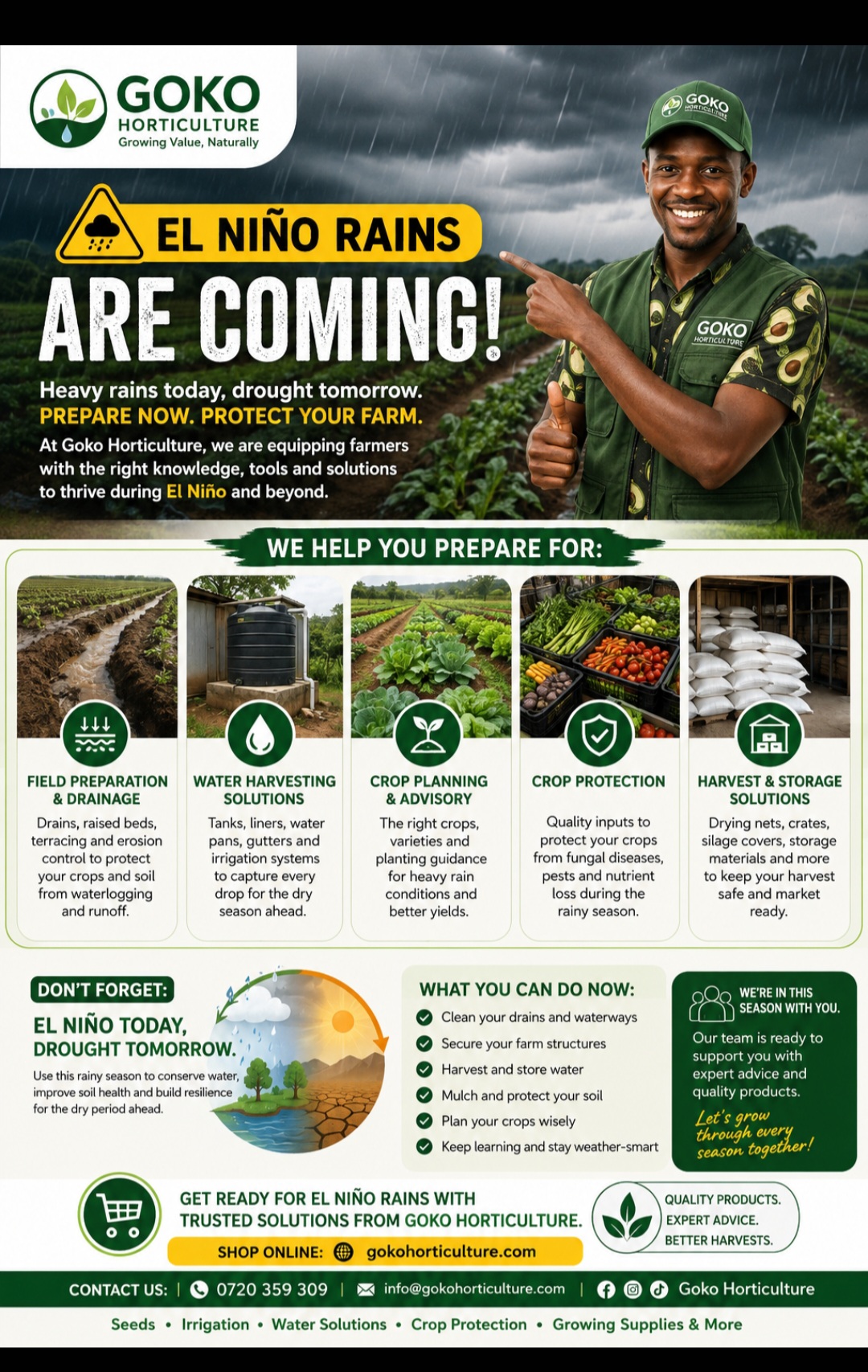
El Niño Rains Are Here: How Farmers Can Prepare, Plant, and Protect Their Harvest
Meta description: Learn practical El Niño farming tips for planting, drainage, water harvesting, crop protection, harvesting, storage and drought preparedness in Kenya.
When the first heavy rains arrive, a farmer can feel both relief and anxiety.
The dry soil finally receives moisture. Water pans begin filling. Pastures turn green and crops appear ready to take off. But within days, that welcome rain can become too much: fields become waterlogged, roads become impassable, vegetables begin rotting, soil is washed away and harvested produce struggles to dry.
For Kenyan farmers, the developing El Niño weather pattern makes preparation especially important. The World Meteorological Organization says El Niño is strengthening and is expected to influence global rainfall patterns during the second half of 2026. The Greater Horn of Africa is expected to experience wetter-than-normal conditions during the October–December period, with parts of Kenya among the areas facing an increased likelihood of enhanced rainfall.
This means farmers should not simply ask, “What should I plant?”
The better question is: How can I use the rain without allowing it to destroy my farm—and how can I save enough water and protect my soil for the next dry period?
Here are practical El Niño farming tips for smallholder and commercial farmers.
1. Understand El Niño and Prepare Before the Heaviest Rains
El Niño is a climate pattern associated with unusually warm ocean temperatures in the central and eastern tropical Pacific Ocean. Those changes influence atmospheric circulation and can alter rainfall and temperature patterns far from the Pacific.
For East Africa, El Niño can contribute to periods of unusually heavy rainfall. However, the effect is not identical in every county or season. Farmers should therefore combine regional climate information with local weather forecasts before making major planting decisions.
The important lesson is simple: do not wait for the rain to become a problem before preparing your farm.
Check drainage channels. Inspect water pans. Clean gutters. Repair storage structures. Protect seed and fertilizer from moisture. Identify low-lying sections of the farm where water normally collects.
Most importantly, avoid planting everything at once simply because the first rains have arrived. Staggering planting dates can reduce the risk of losing an entire crop to one extreme weather event.
These are some of the most important El Niño farming tips because climate-smart farming is about managing risk rather than trying to predict every rainfall event perfectly.
2. Choose Crops and Varieties That Match Wet Conditions
Heavy rainfall does not mean that every crop will perform well.
Crops suited to wetter environments or varieties with better tolerance to temporary waterlogging can be considered where local conditions allow. Rice is an obvious example in suitable areas because it is adapted to flooded production systems.
Some vegetables can also be grown successfully during wet periods, provided drainage is excellent. Examples include certain varieties of kale, spinach, amaranth and other leafy vegetables. However, even these crops can suffer from fungal diseases when leaves remain wet for long periods.
For commercial farmers, crop selection should go beyond the name of the crop. Consider:
- Variety tolerance to waterlogging and common diseases.
- Soil type and drainage capacity.
- Market demand.
- Expected maturity period.
- Availability of quality seed.
- Access to irrigation during subsequent dry periods.
- Whether the crop can be harvested before the most intense rainfall period.
These considerations are particularly important when selecting flood-resistant crops. Remember that “flood-resistant” does not mean a crop can survive indefinitely under deep standing water. Most crops still require oxygen around their roots.
Crops that are particularly sensitive to prolonged waterlogging should be planted only where drainage can be controlled. Root crops, legumes and many horticultural crops can suffer serious losses when soils remain saturated for too long.
3. Field Preparation for Heavy Rains: Drain, Protect and Build Soil
Good field preparation for heavy rains can make the difference between a productive season and a flooded field.
Start by identifying the direction in which rainwater naturally flows across your farm. Do not simply dig drainage channels wherever convenient. Poorly positioned drains can concentrate water and create erosion.
Farmers can consider:
Raised beds:
Useful for vegetables and other crops that are sensitive to waterlogging. Raising the root zone allows excess water to drain away more quickly.
Drainage channels:
Construct channels where necessary to move excess water away from crop areas. Keep them stable and avoid creating fast-flowing channels that cut through productive soil.
Terracing:
On sloping land, terraces can slow down runoff and reduce soil loss. Grass strips and vegetation along drainage areas can further stabilize the soil.
Mulching:
Organic mulch protects the soil surface from the impact of heavy raindrops and reduces erosion. It can also improve soil structure over time.
Cover crops:
Where appropriate, cover crops help keep soil covered and reduce the amount of bare soil exposed to heavy rainfall.
Check dams and contour structures:
Small structures can slow runoff and encourage water infiltration rather than allowing valuable topsoil to wash downstream.
Avoid cultivating directly along unstable riverbanks and drainage channels. Heavy rainfall can cause sudden flooding even when rainfall at the farm itself appears manageable.
4. Turn Excess Rain Into a Water Reserve for the Dry Period
One of the biggest mistakes farmers can make during a wet season is treating excess rainwater as a problem instead of a resource.
Effective water harvesting for farmers can transform heavy rainfall into an insurance policy for the next dry spell.
Start with simple systems.
Roof water harvesting
Install gutters on farmhouses, stores, greenhouses, packhouses and other buildings. Direct the water into tanks or other suitable storage structures.
Water tanks
Plastic and masonry tanks can store water for domestic, livestock, nursery and irrigation use. The size should be based on roof area, expected rainfall, water demand and available budget.
Water pans
Where land and regulations permit, water pans can store substantial quantities of runoff for livestock and irrigation. They should be properly designed, protected from contamination and maintained to reduce excessive sedimentation.
Check dams
Small check dams or other appropriate runoff-control structures can slow water movement and encourage infiltration while reducing erosion.
Farm ponds and storage reservoirs
Commercial farms can consider larger water-storage systems designed around the farm's irrigation demand.
The goal is not simply to collect as much water as possible. Storage should be combined with efficient irrigation, good water-quality management and responsible use.
A farmer who captures water during a wet season can enter the dry season with options rather than desperation.
5. Protect the Harvest From Rain, Mold and Post-Harvest Losses
Producing a good crop is only half the job. The other half is getting it safely to market.
During prolonged wet weather, harvesting should be carefully timed. Avoid harvesting unnecessarily when crops are soaked, particularly produce intended for storage.
For vegetables and herbs, remove damaged, diseased and rotten material quickly. Do not mix damaged produce with healthy produce because decay can spread rapidly.
For grains and seeds, drying is critical.
Produce should be dried on clean surfaces and protected from sudden rain. Where possible, use raised drying platforms, clean tarpaulins or appropriate drying equipment rather than placing produce directly on bare soil.
Do not store grain while it is still too moist. Excess moisture encourages mold growth, insect infestation and quality deterioration.
Storage areas should be:
- Clean and dry.
- Well ventilated.
- Protected from rodents and insects.
- Raised above the floor where appropriate.
- Protected from rainwater and leaking roofs.
- Regularly inspected for signs of mold or pests.
For commercial horticulture, maintain good hygiene from field to packhouse. Harvesting containers should be clean, produce should be handled gently and harvested crops should be moved out of direct sun and rain as quickly as possible.
6. Don't Forget the Dry Period: Start Drought Preparedness Now
A wet season can create a dangerous illusion that water will always be available.
It will not.
Although farmers sometimes associate El Niño with a later La Niña drought, La Niña is not an automatic consequence of El Niño. ENSO can transition to neutral conditions or another phase, and rainfall outcomes vary by region.
Nevertheless, drought preparedness remains essential because rainfall can become irregular after an unusually wet period, while stored water may quickly become inadequate.
Farmers should therefore use the wet period to prepare for the dry one.
Build or repair water storage. Improve soil organic matter. Mulch where appropriate. Plant suitable drought-tolerant crops for the expected dry season. Protect springs and water sources. Maintain irrigation equipment before it is urgently needed.
Where possible, develop a farm water budget showing how much water is available and how much is required for crops, livestock and other activities.
This is the real value of climate-smart agriculture: using today's rainfall to prepare for tomorrow's uncertainty.
7. Make El Niño a Farming Opportunity, Not Just a Threat
Extreme weather creates risks, but good planning can also create opportunities.
Farmers can take advantage of adequate soil moisture to establish suitable crops, replenish water-storage systems, improve soil cover and invest in infrastructure that will remain useful long after the rains stop.
The key is to avoid thinking only about the current season.
Prepare your fields for excess water. Choose crops carefully. Protect your soil. Harvest and store water. Protect harvested produce. Maintain irrigation systems. And start planning for the next dry period before it arrives.
For farmers looking for practical solutions—from irrigation and water-storage equipment to farm inputs, nursery supplies and other agricultural products—explore the farming resources available through Goko Horticulture at GokoHorticulture.com.
The strongest farms are not necessarily those that receive the most rain. They are often the farms that capture, manage and use rainfall most efficiently.
Final Takeaway
The best response to changing weather is not panic—it is preparation.
Use these El Niño farming tips to assess your farm before heavy rains intensify. Improve drainage, select appropriate crops, strengthen erosion-control measures, harvest excess water and protect your harvest from moisture and pests.
And while you are enjoying the rain, keep one eye on the dry season ahead.
Prepare for the rain. Store the water. Protect the soil. Secure the harvest.
#ElNinoFarming #ElNinoFarmingTips #ClimateSmartAgriculture #DroughtPreparedness #WaterHarvesting #FloodResistantCrops #SustainableFarming #KenyanFarmers #SmartFarming #WaterManagement #FarmManagement #AgricultureKenya #GokoHorticulture #Agroecology #ResilientFarming
0 Comments
No comments recorded yet. Be the first to share feedback.